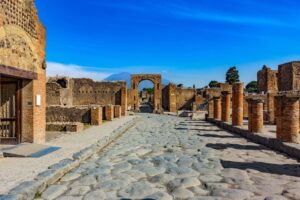
Ancient Rome is celebrated for its unparalleled accomplishments in engineering, architecture, and urban planning. Among the many achievements of this great civilization, its extensive network of paved streets stands out as a remarkable feat.
In this comprehensive article, we will embark on a journey through history to explore the captivating story of paved roads in ancient Rome.
We will delve into the motivations that drove their construction, the materials and techniques employed, and the lasting legacy they have left on the world’s infrastructure.
I. The Need for Paved Streets in Ancient Rome
Facilitating Trade: The Roman Empire was vast, and its prosperity relied heavily on trade. Paved roads were a crucial component of this economic engine, enabling the efficient movement of goods across vast distances.
Military Mobility: The Roman military, renowned for its strategic prowess, depended on well-maintained roads for rapid troop deployment and the transportation of supplies.
Urban Development: As Rome expanded, its cities needed proper infrastructure to flourish. Paved streets facilitated urban development, allowing for the growth of thriving communities.
II. The Early Stages of Roman Roads
Roman road construction had its roots in the 4th century BCE. Initially, roads were rudimentary, consisting of dirt or gravel paths. These early efforts laid the foundation for the more advanced paved roads that would follow.
III. The Roman Road Network
The Roman road network was nothing short of astonishing. It crisscrossed the empire, connecting major cities, forts, and provinces.
The layout was organized, with roads radiating from Rome like spokes on a wheel, facilitating efficient travel and communication.
IV. Paving Materials
Roman engineers used a variety of materials for road construction, choosing them based on factors like terrain, location, and expected traffic. Common materials included stone, gravel, and concrete. These choices ensured the roads could withstand the test of time.
V. Construction Techniques
Building durable roads required sophisticated engineering techniques. Romans began by excavating the roadbed, followed by foundation preparation. The use of multiple layers, such as the sub-base and surface layers, ensured the road’s longevity and stability.
VI. Famous Roman Roads
Several Roman roads have become legendary for their historical significance and durability. The Via Appia, stretching from Rome to the southern regions of Italy, was one such road.
The Via Aurelia and Via Claudia Augusta also left indelible marks on history.
VII. Maintenance and Repair
Maintaining these extensive road networks was no small feat. The Romans were diligent in keeping their roads in good condition through regular maintenance, including clearing debris and repairing damage caused by weather or wear and tear.
VIII. Roadside Infrastructure
Roman roads were often accompanied by a range of infrastructure, including milestones to mark distances, taverns to provide rest and sustenance for travelers, and waystations for changing horses or resting overnight.
IX. The Economic Impact
The economic impact of Roman roads cannot be overstated. These well-constructed thoroughfares facilitated economic growth by enabling trade, reducing transportation costs, and connecting distant provinces to the heart of the empire.
X. Military Importance
In times of war, the Roman legions relied on the road network for rapid deployment. The ability to move troops quickly and efficiently was a critical strategic advantage.
XI. Urban Development
Paved streets played a pivotal role in the development of Roman cities. The presence of well-maintained roads influenced urban planning and allowed for the creation of organized, thriving urban centers.
XII. Decline and Abandonment
With the fall of the Roman Empire, many of its once-magnificent roads fell into disrepair. Factors like economic decline, population shifts, and the challenges of maintaining such an extensive network contributed to their decline and eventual abandonment.
XIII. The Legacy of Roman Roads
The legacy of Roman roads endures to this day. These ancient thoroughfares have influenced modern road systems and engineering practices, leaving an indelible mark on the infrastructure of the world.
XIV. Rediscovery and Restoration
In recent centuries, there has been a resurgence of interest in preserving and restoring Roman roads. Archaeologists and historians have worked diligently to rediscover these historical treasures and protect them for future generations.
Conclusion
In conclusion, the paved streets of ancient Rome stand as a testament to the engineering ingenuity of this remarkable civilization. More than mere pathways, these roads were the lifeblood of the Roman Empire, facilitating trade, communication, and military conquests.
Their enduring legacy lives on in the modern road networks that crisscross the globe today, a tribute to the lasting impact of Roman engineering and innovation on the world’s infrastructure.
Leave a Reply