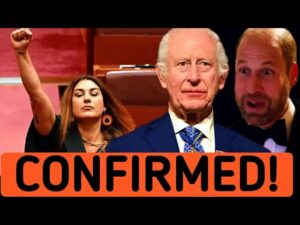
Senator Lydia Thorpe
In the ever-evolving landscape of politics, two figures stand out for their contrasting approaches: King Charles and Senator Lydia Thorpe.
Today, we dive deep into their respective leadership styles, examining how their actions—or inactions—reflect their commitment to accountability and engagement with the public.
King Charles has recently found himself under scrutiny for his apparent inability to handle criticism effectively.
A notable instance of this is his refusal to engage with Senator Lydia Thorpe, a vocal critic of the monarchy.
This avoidance raises questions about his capacity as a leader.
After all, a true leader should welcome dissenting opinions and use them as opportunities for growth.
Unfortunately, it seems that King Charles prefers to remain insulated within the confines of his royal existence, far removed from the realities faced by everyday citizens.
This reluctance to confront criticism paints a troubling picture for the nation.
At a time when decisive leadership is crucial, the King appears more focused on maintaining his public image than addressing pressing issues like economic disparity.
The widening gap between the wealthy and the poor continues to plague the country, yet King Charles seems hesitant to tackle these challenges head-on.
Instead of taking bold steps, he opts for a more superficial approach, which leaves many feeling disillusioned.
Moreover, the King’s silence on civil liberties raises further concerns.
Under his reign, numerous instances have emerged where the government has encroached on citizens’ rights.
Rather than standing up for the people, King Charles has chosen to remain silent, reinforcing the notion that he is disconnected from the struggles of his subjects.
This lack of engagement only serves to deepen the divide between the monarchy and the populace.
Perhaps the most alarming aspect of King Charles’s reign is his inaction regarding climate change.
Despite urgent warnings from scientists, he has failed to implement meaningful measures to combat this existential threat.
His negligence not only reflects poorly on his leadership but also signifies a disregard for the well-being of future generations.
The King’s avoidance of Senator Thorpe is emblematic of his broader shortcomings, revealing a pattern of evasion rather than accountability.
In stark contrast stands Senator Lydia Thorpe, a figure who embodies courage and integrity in the political arena.
She is unafraid to challenge authority, even when that authority resides in the form of King Charles.
Thorpe’s unwavering commitment to her beliefs and her willingness to voice her criticisms openly set her apart from many of her peers.
In a world where political bravery is often in short supply, she stands as a beacon of hope.
Thorpe’s refusal to back down in the face of opposition speaks volumes about her character.
While King Charles retreats behind palace walls, Thorpe boldly confronts the issues that matter.
This difference in approach highlights a fundamental divergence in leadership style—one prioritizing self-preservation, the other embracing accountability.
It begs the question: who truly deserves to lead?
What makes Thorpe’s stance even more admirable is her proactive approach to politics.
She isn’t just a critic; she’s an advocate for change, envisioning a better future for her constituents.
Her ability to articulate a clear vision, coupled with her determination to see it realized, marks a refreshing departure from the reactive politics that often dominate the scene.
As we reflect on these two leaders, it becomes increasingly clear that the nation yearns for a figure like Senator Thorpe.
In a time when political integrity seems to be fading, her commitment to standing up for what she believes in shines brightly.
She reminds us that true leadership involves not only confronting power but also championing the causes that matter most to the people.
In the end, the stark contrast between King Charles and Senator Thorpe serves as a powerful reminder of what effective leadership should look like.
While one leader hides from criticism, the other embraces it, demonstrating the kind of courage and integrity that is essential for meaningful change.
As the political landscape continues to shift, it’s evident that voices like Thorpe’s are more important than ever.
The discussion surrounding these two figures prompts us to consider the qualities we value in our leaders.
Do we want someone who avoids accountability, or do we seek a leader who stands firm in their convictions?
The answer seems clear.
In a world craving authenticity and courage, Senator Lydia Thorpe emerges as a shining example of principled leadership.