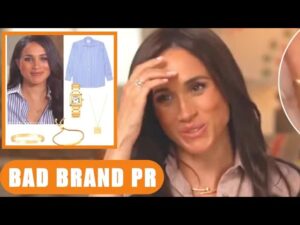
The luxury jewelry industry is currently navigating turbulent waters, particularly the renowned French house Cartier, which finds itself grappling with what insiders are calling the “Antimarkle effect.”
This phenomenon emerged following several high-profile appearances by Meghan Markle, who was once seen as a beacon of style and elegance.
Instead of boosting Cartier’s sales, her association with the brand has seemingly backfired, leaving the prestigious jeweler in an unusual predicament.
In the opulent halls of Place Vendôme, where Cartier has proudly showcased its legacy for decades, murmurs of concern are palpable.
The brand that once adorned iconic figures such as Grace Kelly and Elizabeth Taylor is now facing an unexpected challenge.
Sources close to the brand have revealed that specific collections linked to the Duchess of Sussex have experienced a noticeable dip in interest from their elite clientele.
A former executive from the luxury retail sector, who prefers to remain anonymous, shared insights into this strange reversal of fortune.
Traditionally, when a royal is spotted wearing a piece of jewelry, sales typically soar.
However, in Markle’s case, it seems that some long-time clients are specifically requesting items that haven’t been associated with her, coining the term “Markled” to describe those pieces.
The saga kicked off when Meghan was seen sporting Cartier’s famed love bracelet during various public events.
Initially, the brand welcomed this association, expecting a surge in sales typical of royal endorsements.
However, as the Duchess’s public image became increasingly controversial—especially after her departure from royal duties and that explosive interview with Oprah—the narrative began to shift dramatically.
Marketing analytics reveal a perplexing trend.
In key markets, particularly among traditional luxury consumers, interest in certain Cartier pieces linked to Meghan has gradually waned.
This has left marketing experts puzzled, as it goes against the grain of conventional celebrity endorsement expectations.
Dr. Sarah Henderson, a luxury market analyst, notes that the aspirational allure typically tied to royal endorsements has been complicated by the divisive nature of Markle’s public persona.
The situation has prompted urgent meetings within Cartier’s parent company, Richemont.
Executives are wrestling with how to address this unexpected challenge without overtly distancing themselves from any particular client, royal or otherwise.
A senior insider from the jewelry industry remarked that Cartier is treading a fine line; they cannot openly acknowledge the issue without risking their reputation, yet they must reassure their core clientele that the brand remains synonymous with timeless luxury.
The effects of this crisis extend beyond mere sales statistics.
Social media sentiment analysis indicates a significant uptick in negative reactions whenever Cartier pieces are linked to Meghan’s public appearances.
In fact, hashtags related to this sentiment have begun trending among luxury consumers, particularly in Asian markets where royal associations usually carry substantial weight.
This isn’t just about numbers, according to social media analyst Jennifer Chen.
She highlights a shift in brand perception, with some consumers expressing concerns that Cartier’s ties to such a polarizing figure could tarnish its legacy of understated elegance.
This has created a unique challenge for Cartier’s PR team, which must now carefully navigate their response to maintain relationships with all clients while safeguarding the brand’s esteemed image.
Sources suggest that recent advertising efforts have subtly shifted focus back to Cartier’s historical roots and timeless designs, rather than contemporary personalities.
Several factors contribute to this curious scenario.
The Duchess’s exit from royal duties, coupled with her controversial media appearances, has created what some are labeling a luxury liability.
Traditional luxury consumers, who often prioritize discretion and subtlety, seem to be distancing themselves from styles perceived as linked to excessive media scrutiny and drama.
Luxury brands thrive on exclusivity and mystique, explains consultant Marcus Richardson.
When a product becomes associated with ongoing media controversy, it risks losing the essential element of discreet sophistication that discerning luxury consumers seek.
This situation has sent ripples through the luxury jewelry sector, prompting other brands to take note and exercise caution regarding celebrity partnerships, especially with individuals who might provoke division in key markets.
Interestingly, not all markets are responding uniformly.
While traditional luxury consumers appear hesitant, data indicates that younger, socially conscious buyers continue to embrace pieces associated with Meghan, viewing them as symbols of independence and modern values.
This divergence presents a unique challenge for heritage brands like Cartier, which must balance the interests of their traditional customer base with evolving social dynamics.
As Cartier navigates these uncharted waters, industry observers speculate on the potential long-term implications for luxury brand celebrity associations.
What began as a simple sales phenomenon has transformed into a complex case study in modern luxury brand management.
For now, Cartier maintains a dignified silence, allowing its rich heritage to resonate.
Yet behind closed doors, strategies are undoubtedly being crafted to ensure that this temporary turbulence does not dim the enduring brilliance of one of luxury’s most revered names.
In the end, true luxury transcends fleeting controversies.
As one seasoned luxury journalist aptly noted, Cartier has weathered revolutions, wars, and countless societal shifts.
They will undoubtedly endure this latest storm, albeit with valuable lessons learned about the intricate dance between modern royal associations and brand integrity.