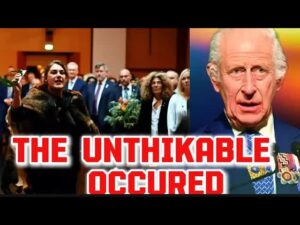
In a stunning moment that reverberated through the halls of power, Senator Lydia Thorpe interrupted King Charles III during a formal speech, igniting a passionate debate about colonialism and indigenous rights in Australia.
As the king addressed the audience, Thorpe’s voice rang out, piercing the solemn atmosphere with an urgent demand for acknowledgment and justice.
“You are not our king, this is not your land,” she proclaimed, challenging the very legitimacy of the monarchy.
This unexpected interruption sent shockwaves through the chamber, freezing the audience in disbelief.
Thorpe, an Aboriginal senator known for her fierce advocacy, stood resolute as she declared, “You’re on stolen land.”
Her words cut through the formality of the occasion, forcing everyone to confront the painful legacy of colonialism and its impact on Indigenous Australians.
For a brief moment, the king’s composed demeanor faltered, his carefully crafted speech stuttering to a halt amid the uproar.
The incident was more than just a disruption; it was a historical reckoning.
Thorpe’s bold statement highlighted the ongoing struggle for justice faced by Indigenous communities, reminding all present that the wounds of history remain fresh and unresolved.
Her defiance served as a powerful reminder that true reconciliation requires more than mere words; it demands action and acknowledgment of past wrongs.
As murmurs spread throughout the chamber, the king regained his composure, yet his expression revealed a mix of surprise and contemplation.
The moment lingered in the air long after Thorpe exited the stage, leaving behind a resonant message about the enduring fight for equality and respect for Indigenous peoples.
Her actions illustrated a commitment to amplifying marginalized voices and challenging systemic injustices, a battle she has fought tirelessly throughout her political career.
Senator Thorpe’s journey is emblematic of resilience and unwavering dedication to Indigenous rights.
As the first Aboriginal senator from Victoria, she has consistently championed the causes of her people, advocating for reparations and recognition of the Stolen Generations—those Indigenous children forcibly removed from their families under oppressive policies.
Her activism seeks not only to address historical injustices but also to empower Indigenous communities to reclaim their autonomy and heritage.
Thorpe’s interruption of the king’s speech was not an isolated event; it was a continuation of a lifelong struggle against colonial structures.
Her actions resonate deeply within the context of Australia’s history, where the scars of British colonialism still haunt the nation.
To understand the gravity of her protest, one must reflect on the colonization of Australia that began in 1770 when Captain James Cook claimed the land for the British Crown, setting in motion a series of events that would lead to the displacement and suffering of Indigenous Australians.
The arrival of the British brought disease, violence, and cultural disruption, forever altering the lives of First Nations people.
Generations faced forced assimilation policies aimed at erasing their identities, leading to the heartbreaking phenomenon known as the Stolen Generations.
This dark chapter in Australian history saw countless children separated from their families, severing their connections to culture and heritage—a trauma that continues to affect Indigenous communities today.
Thorpe’s act of defiance in Parliament sparked widespread reactions across Australia.
News of the interruption spread rapidly, igniting passionate discussions on social media platforms.
While some hailed her bravery and commitment to justice, others criticized her for perceived disrespect.
The incident served as a catalyst for a national conversation about the legacy of colonialism and the ongoing fight for Indigenous rights, forcing Australians to confront uncomfortable truths about their history.
In the aftermath of the incident, calls for a republic grew louder, reigniting debates about severing ties with the monarchy.
Thorpe’s powerful words struck at the heart of the Crown’s legitimacy, highlighting the historical injustices that have shaped Australia’s identity.
Her interruption became a potent symbol of the movement toward an Australian head of state that acknowledges the true history of the nation and respects its Indigenous heritage.
Senator Lydia Thorpe’s courageous stand in the face of authority serves as a reminder that the fight for justice and recognition is far from over.
Her actions resonate as a clarion call for change, urging all Australians to reflect on their shared history and work toward a future where the rights of Indigenous peoples are upheld and respected.
The echoes of her voice challenge us to confront the past and strive for a more equitable society, one that honors the rich tapestry of cultures that make up this land.