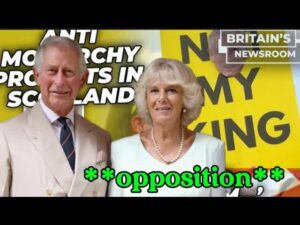
As King Charles III embarks on his momentous journey to Australia, the anticipation surrounding his visit is palpable.
Currently en route, the King was spotted arriving at Heathrow Airport for a commercial flight, reportedly making his way to Singapore before reuniting with Queen Camilla.
The couple plans to touch down in Sydney later today, marking a significant milestone: this will be the first time a reigning king has ever set foot on Australian soil.
Back in 1954, it was the late Queen Elizabeth II who made history as the first reigning monarch to visit the country, just a year after her own coronation.
However, the King’s trip is not without its challenges.
Concerns arose regarding his health following a cancer diagnosis, leading to speculation about whether this visit would even take place.
While the trip is scheduled for six days, it has been scaled back, with New Zealand being dropped from the itinerary.
Instead, King Charles will only visit New South Wales, focusing on Sydney and Canberra, unlike his mother who toured various states during her visit almost seven decades ago.
At 75 years old, King Charles is embarking on this journey under different circumstances than his mother did at the young age of 27.
Consequently, he will take a rest day tomorrow, which has left some racegoers disappointed, especially with the King Charles III Stakes happening at Randwick Racecourse.
Speculation had circulated about whether the royal couple would attend the event, but it seems that will not be the case.
Nevertheless, the King has planned to meet with notable cancer experts in Australia, recognized as Australians of the Year for their significant contributions to combating melanoma, a prevalent form of skin cancer in the country.
Public sentiment regarding the royal visit is mixed, depending largely on whom you ask.
Republican sentiments are on display, with activists dubbing the visit a “Farewell Tour of Oz.”
Prominent Republican campaigner Graham Smith has traveled to Sydney specifically to protest, while six state premiers have opted out of attending the official reception in Canberra on Monday.
Their reasons range from cabinet meetings to trade envoy commitments, but monarchists are quick to point out that this visit has been on the calendar for months, raising eyebrows at the lack of engagement from these leaders.
The divide in public opinion is evident.
Some Australians express excitement about the royal visit, seeing it as a unique opportunity to welcome the King and Queen.
Others, however, remain indifferent or even opposed to the monarchy’s presence, advocating for a republican future.
This spectrum of views paints a vivid picture of a nation grappling with its identity and relationship to the British Crown.
In a show of support for the monarchy, the Australian Monarchist League sent a letter to King Charles ahead of his arrival, gathering thousands of signatures welcoming him to the country.
They assert that maintaining the monarchy is vital for protecting the freedoms and democracy of Australians.
Meanwhile, upon the royal couple’s landing, the iconic Sydney Opera House will be illuminated with images from King Charles’s previous visits to Australia, symbolizing the significance of this occasion.
As the King and Queen touch down, they arrive amid a backdrop of protests organized by Republican activists.
These demonstrations have gained traction, with an estimated 1,000 participants voicing their demands for a republic.
The protests highlight a growing discontent with the monarchy’s role in Australia, particularly among younger generations who question the relevance of the Crown in contemporary society.
The protests are strategically located in key areas such as Canberra and Sydney, underscoring the importance of these cities in Australia’s political landscape.
Activists have rallied diverse groups, including indigenous rights organizations and environmental advocates, all united in their call for a shift towards self-governance and independence from colonial ties.
In light of the anticipated protests, authorities have ramped up security measures to ensure the safety of the royal visit.
Police presence is heightened, and crowd control protocols are in place to prevent any potential unrest.
The government is keenly aware of the delicate balance between honoring the royal visit and addressing the concerns of those who oppose it.
Polling data reflects a significant shift in public opinion regarding the monarchy, with more Australians expressing openness to a republican system.
This evolving sentiment suggests that the monarchy’s influence may be waning, especially as younger Australians rethink the historical ties to Britain.
The visit of King Charles III serves as a critical juncture in this ongoing conversation about national identity and governance.
The reactions from Aboriginal and Torres Strait Islander communities further complicate the narrative surrounding the monarchy’s role in Australia.
While some view the visit as an opportunity for reconciliation, others express outrage at the monarchy’s historical connection to colonial oppression.
This tension highlights the need for a broader dialogue about the legacy of colonization and the path forward for First Nations peoples in Australia.
As King Charles’s historic visit unfolds, it brings to the forefront questions about the future of the monarchy in Australia.
The juxtaposition of royal celebrations against the backdrop of Republican protests paints a complex picture of a nation at a crossroads, where the echoes of the past collide with aspirations for a more independent future.
The outcome of this visit could very well shape the ongoing discourse around Australia’s identity and governance for years to come.