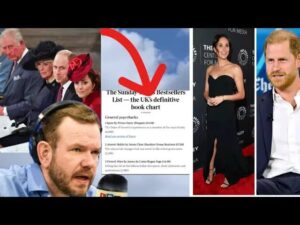
In a world where the British media often portrays itself as the bastion of truth and morality, Prince Harry’s memoir, “Spare,” has turned that narrative on its head.
The book doesn’t just tell Harry’s story; it lays bare the absurdities and contradictions of the media landscape, inviting the public to scrutinize the very institutions that have long held sway over public opinion.
It’s as if Harry has thrown a mirror at Fleet Street, and what we see reflected back is nothing short of comical.
Consider this: the same outlets that have celebrated military triumphs are now grappling with how to respond to Harry’s revelations about his time in the armed forces.
In a shocking twist, he candidly admits to killing 25 members of the Taliban.
One might expect the tabloids to herald him as a hero, yet they find themselves in a moral quandary.
How can they reconcile their past glorification of soldiers with their current disdain for Harry?
It’s a classic case of hypocrisy that seems to be lost on them.
The Daily Mail, in particular, appears caught in a web of its own making.
They’ve plastered Harry’s story across their pages, simultaneously begging to be spared from the very details they’re sensationalizing.
It’s a spectacle that borders on the absurd.
How can one demand to be spared while dedicating extensive coverage to the subject?
It’s almost poetic in its irony, revealing the desperation that has overtaken the right-wing media.
James O’Brien, a keen observer of these dynamics, highlights the sheer ridiculousness of the situation.
The media’s frantic attempts to vilify Harry seem scripted, as if they’re reading lines from a play without ever having engaged with the text.
Their narrative of scandal surrounding Harry’s memoir is more smoke than fire—an exaggerated response designed to distract from more pressing issues.
What’s truly laughable is the media’s self-proclaimed role as defenders of tradition and family values.
They preach resilience and the importance of facing challenges head-on, yet when Harry opens up about his struggles, they recoil.
Instead of empathy, they label him a traitor, a whiner.
The mental gymnastics required to maintain this double standard is nothing short of impressive, but it also reveals their deep-seated biases.
Moreover, the idea that Harry is somehow undermining the royal family is a misinterpretation of his intentions.
He’s not launching an attack; rather, he’s sharing his personal journey—a quest for understanding amidst the chaos of royal life.
But the media seems unable to grasp this nuance, preferring instead to cling to their simplified narratives.
It’s fascinating to witness how those who champion free speech and individual liberties are now attempting to silence Harry’s voice.
His memoir doesn’t fit into their neatly packaged storylines, so they resort to mockery and distortion.
This is not merely an attack on Harry; it’s a broader commentary on their unwillingness to confront complexity.
Harry’s story, filled with loss and trauma, is not just about him; it reflects a larger human experience that the media seems intent on ignoring.
The question arises—why the relentless desire to tear him down?
Is it fear of change?
Or perhaps discomfort with someone challenging the established order?
In a way, Harry’s journey is a powerful reminder of the importance of authenticity.
He seeks to reclaim his narrative, to live life on his own terms, and for that, he should be celebrated, not ridiculed.
The right-wing media’s reaction to his memoir underscores their priorities, which seem to revolve around preserving a particular narrative rather than seeking truth.
As we dissect the media’s response to “Spare,” it becomes evident that their outrage is less about Harry and more about their inability to adapt to a shifting landscape.
They cling to outdated morals, and in doing so, they reveal their own absurdity.
The laughter that ensues is not just at their expense; it’s a reflection of our collective incredulity at their antics.
So, the next time you encounter another scathing headline targeting Harry or belittling his memoir, remember this: it’s all part of a larger performance by the right-wing media.
Their desperate attempts to uphold a curdled sense of morality only serve to highlight their own failings.
In the end, we’re left with a story that’s not just about a prince but about the hilarity of hypocrisy in the media.