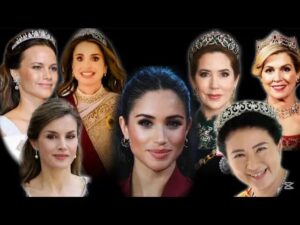
In a world where royal fashion often steals the spotlight, a group of remarkable women within the monarchy are shifting the narrative.
Rather than letting their wardrobes define them, these royals are using their platforms to foster real change and contribute positively to society.
This trend was recently highlighted by Kate Middleton’s decision to keep her fashion choices under wraps in favor of promoting her charitable endeavors.
After years in the public eye, she seems eager for recognition that transcends mere style.
But what truly shapes a royal woman’s legacy?
The legacies of these royal women are not measured by glamorous gowns or social media likes; instead, they are defined by their substantial contributions to society.
Some entered royal life with impressive careers already established in fields like diplomacy, business, and humanitarian work, while others harnessed their royal status to advocate for significant causes.
Their influence extends beyond palace gates, illustrating that being royal is about service, leadership, and making a difference.
Take Meghan, Duchess of Sussex, for instance.
Before her royal days, Meghan Markle was a successful actress and a passionate advocate for gender equality.
With a double major from Northwestern University and an impressive acting career on “Suits,” she was already well-known.
But her activism began much earlier when, at just 11 years old, she challenged a sexist advertisement.
As a royal, she launched initiatives like the “Together Our Community” cookbook, which raised over $1.2 million for Grenfell Tower survivors, and the SmartWorks program to support unemployed women.
Even after stepping back from royal duties, her podcast “Archetypes” continues to address stereotypes that hold women back.
Similarly, Princess Sophia of Sweden transitioned from a model and reality TV star to a dedicated philanthropist.
She co-founded Project Playground, a nonprofit aimed at supporting at-risk youth in Sweden and South Africa.
Her commitment to mental health and anti-bullying campaigns exemplifies her dedication to using her royal platform for positive change.
During the pandemic, she even volunteered at a local hospital, showcasing her hands-on approach to service.
Empress Masako of Japan brings a unique perspective as a former diplomat.
With a degree from Harvard and extensive experience in international relations, she has navigated the complexities of royal life while advocating for mental health awareness and education.
Since becoming Empress in 2019, she has utilized her diplomatic skills to strengthen Japan’s global relationships, proving that her influence extends far beyond traditional royal duties.
Queen Letizia of Spain carved her path as a respected journalist before entering royalty.
Her background in journalism, coupled with her dedication to education and health, particularly for children, highlights her commitment to public service.
Letizia’s journey from news anchor to Queen illustrates how she has leveraged her skills to make a tangible impact on Spanish society.
Queen Mary of Denmark also blends her corporate expertise with her royal responsibilities.
With a background in business and marketing, she has made significant strides in addressing social issues through her Mary Foundation, which tackles domestic violence and bullying.
Her work in gender equality and mental health advocacy demonstrates her ability to merge professional acumen with a passion for humanitarian efforts.
In the Netherlands, Queen Maxima is a financial powerhouse.
With degrees in economics and a prestigious banking career, she now champions inclusive finance as the UN Secretary-General’s Special Advocate.
Her initiatives have significantly advanced financial inclusion in over 60 countries, showcasing the power of leveraging expertise for the greater good.
Meanwhile, Queen Rania of Jordan has redefined modern royalty through her commitment to education and humanitarian work.
With a business background, she founded the Jordan River Foundation, focusing on economic and social development for women and children.
Her advocacy for refugee rights and educational reform illustrates her proactive approach to leadership, emphasizing action over title.
These royal women exemplify that being a member of the monarchy is not merely about tradition or privilege.
They are transforming their roles into meaningful legacies through advocacy, philanthropy, and innovative solutions to societal challenges.
Each story serves as a powerful reminder that true leadership lies in the impact one makes, not just the titles one holds.
By harnessing their influence for good, they inspire future generations to see royalty as a platform for change, rather than just a position of status.